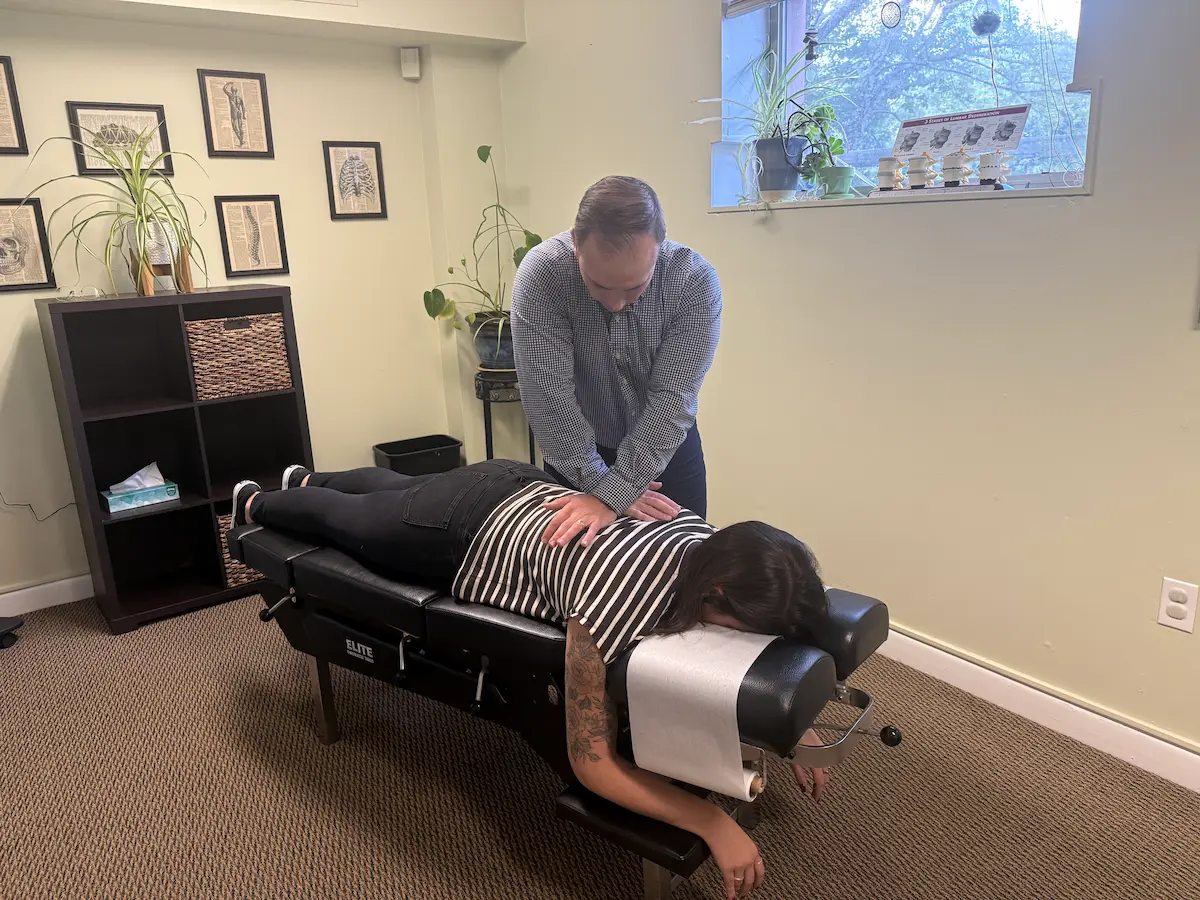
Gonstead and Thompson Drop Table are two hands-on chiropractic techniques we use at Anchor Point Chiropractic in Plymouth, MA. Gonstead is a precise approach that pinpoints the exact spinal level involved before adjusting, while Thompson Drop Table uses a table with sections that drop slightly to assist the adjustment with less force. Neither one is better across the board. Our doctors choose based on your exam findings, your condition, and what feels comfortable for you.
Why We Use More Than One Technique
No two spines are the same. A desk worker with a stiff neck, a contractor with a low back strain, and a grandparent with arthritis all need something a little different.
That is why our chiropractic care is never a one size fits all approach. Having more than one technique lets us match the adjustment to the person, not the other way around. Since 2010, our practice has cared for Plymouth patients of every age, and that flexibility is a big part of how we do it.
What Is the Gonstead Technique?
Gonstead is a precise, hands-on technique. Before any adjustment, the doctor works to find the exact spinal level that is restricted and the direction it needs to move.
Once that is clear, the adjustment is specific to that one area. It is especially helpful for patients who want a highly targeted approach.
What a Gonstead Adjustment Feels Like
Gonstead adjustments are quick and focused. You may hear a pop, which is gas releasing from the joint, and hearing it or not does not change whether the adjustment worked.
Most adjustments are not painful. Some patients feel mild soreness afterward that usually fades within a day.
Who Gonstead Often Suits
- Patients who like a very specific, targeted adjustment
- People whose pain is tied to one clear area of the spine
- Patients who have had chiropractic care before and know what works for them
What Is the Thompson Drop Table Technique?
Thompson Drop Table uses a special table with sections that can be raised slightly. During the adjustment, the section drops a short distance, and that motion helps move the joint.
Because the table does part of the work, the adjustment uses less force. Many patients find it very comfortable, which is why it works for such a wide range of people.
What a Thompson Adjustment Feels Like
You will feel light pressure from the doctor’s hands followed by a quick, gentle drop. Most people describe it as a soft thud rather than a push.
Who Thompson Often Suits
- First-time patients who feel nervous about being adjusted
- People who want an adjustment that uses less force
- Patients recovering from an injury who need a lighter touch
- Older adults looking for a gentler option
Gonstead vs. Thompson: How They Compare
Where They Overlap
- Both are hands-on and performed by the doctor
- Both aim to restore normal motion to restricted joints and ease pressure on nearby nerves
- Both are chosen based on your exam, not a set routine
Where They Differ
- Force: Gonstead uses a quick, direct adjustment. Thompson lets the table assist, so less force is needed.
- Focus: Gonstead zeroes in on one exact spinal level. Thompson is often chosen when comfort and a lighter touch are the priority.
- Feel: Gonstead feels like a quick, targeted push. Thompson feels like a gentle drop.
How Our Doctors Decide Which Technique to Use
Your technique is chosen after your exam, not before. At our Plymouth office, every new patient starts with a one-on-one consultation, specific testing, and X-rays when needed.
Then Dr. Jeffrey Vitenas and Dr. Jessie Swink review your case together. Both are trained in Gonstead, Thompson Drop Table, and Webster, so the choice comes down to what you need. Two sets of eyes on every case means nothing gets missed.
What We Look for During Your Exam
- Which joints are restricted and how they move
- Where your pain or nerve symptoms are coming from
- Your age, health history, and any past injuries
- How comfortable you feel with different types of adjustments
What Care May Include
- Gonstead, Thompson Drop Table, or a mix of both
- Extremity adjustments for the shoulders, elbows, or wrists when needed
- Intersegmental traction to loosen tight muscles before your adjustment
Your first adjustment happens at your second visit, after the doctor walks you through your findings and X-rays. You can see the full process on our what to expect at your first visit page.
Can One Visit Use Both Techniques?
Yes, and it happens often. Your neck, mid back, low back, and pelvis do not always need the same approach, so the doctor may use Gonstead in one area and Thompson Drop Table in another during the same visit.
For example, a patient with a stiff upper back and a sore low back might get a targeted Gonstead adjustment higher up and a gentle drop adjustment for the pelvis. The goal is to use whatever works best for each area, not to stick to one style for the sake of it.
Common Myths About Chiropractic Adjustments
“If It Doesn’t Crack, It Didn’t Work”
The cracking sound is just gas releasing from the joint. Thompson adjustments often make little or no sound, and they can work just as well.
“Gentler Means Less Effective”
A lighter adjustment is not a weaker one. What matters is that the right joint gets moved in the right direction, and the table can help do that with less force.
“Once You Start, You Have to Come Forever”
Your plan is built around your exam, not a package. As you improve, we will tell you when it is time to come in less, and ongoing care is always your choice.
Can You Ask for a Specific Technique?
Yes. If you have had a good experience with one technique or feel nervous about another, tell us. Your comfort matters, and we will explain our reasoning either way.
Some patients start with Thompson and move to Gonstead as they heal, or the other way around. Care can change as your body changes.
If you are still comparing practices, our guide to finding a chiropractor covers the questions worth asking before you book.
Frequently Asked Questions
Is one technique safer than the other?
Both are safe when performed by a trained chiropractor. The doctors choose based on your exam and adjust their approach to your comfort.
How long does a visit take?
Your first visit runs about 30 to 45 minutes. After that, regular visits average 15 to 20 minutes.
What if I have never seen a chiropractor before?
That is completely fine. Your doctor will explain each step before it happens, and Thompson Drop Table is often a comfortable place to start for first-time patients.
Find the Right Adjustment for Your Body
Not sure which technique fits you? That is our job to figure out. Call 508-746-5899 or contact Anchor Point Chiropractic to schedule your visit.