The main difference between sciatica and low back pain is where the pain travels. Low back pain usually stays in the lower back, while sciatica is nerve pain that runs from the low back or buttock down one leg, often with numbness or tingling. At Anchor Point Chiropractic in Plymouth, MA, we test to find out which one you are dealing with, because the cause shapes the care.
What Low Back Pain Usually Feels Like
Low back pain is the most common reason patients come to us. It often starts with a specific moment, like lifting the wrong way, or builds slowly from hours of sitting.
- A dull ache that gets worse with sitting or standing
- Sharp pain when you bend or twist
- Stiffness that is worst in the morning
- Limited range of motion
Most of the time, low back pain comes from restricted joints, strained muscles, and muscle guarding. Your body tightens up to protect the area, and that tightness can keep the pain going long after the original strain has healed. Our back pain relief page explains this cycle in more detail.
What Sciatica Usually Feels Like
Sciatica is not a diagnosis on its own. It describes irritation or compression of the sciatic nerve somewhere between the lower back, pelvis, and leg.
- Sharp, burning, or electric-shock pain down one leg
- Numbness or tingling in the leg, calf, or foot
- Weakness in the affected leg
- Pain that flares with sitting, long standing, coughing, or sneezing
Many people with sciatica have very little back pain at all. The leg pain is often the loudest symptom. You can read more on our sciatica treatment page.
Sciatica vs. Low Back Pain: Key Differences
Where the Pain Goes
Low back pain tends to stay local, though it can spread into the buttock. Sciatica often travels below the knee and follows a line down the back or side of the leg.
What the Pain Feels Like
Back pain is more often achy, stiff, or sore. Sciatica tends to feel sharp, burning, or electric, and it often comes with pins and needles.
What Is Behind It
Low back pain usually involves joints and muscles. Sciatica involves a nerve, and the irritation can come from a disc, a joint, or tight muscles along the nerve’s path.
When It Is Both
Sometimes it is not one or the other. A bulging or herniated disc can cause back pain and press on a nerve at the same time. Our post Is It Just Back Pain? explains how disc problems develop.
Common Causes of Sciatica
Because sciatica describes a symptom and not a single condition, the real question is what is irritating the nerve. In most cases, it comes down to one of three sources.
Disc-Related Sciatica
When a disc in the lower back bulges or herniates, it can press on the nerve roots that form the sciatic nerve. This type often gets worse with sitting, bending, coughing, or sneezing.
Joint-Related Sciatica
Restricted joints in the lower back or pelvis can change how the area moves and irritate nearby nerves. This type often comes with stiffness and pain that shifts with certain positions.
Muscle-Related Sciatica
Tight muscles deep in the buttock and hip can squeeze the sciatic nerve along its path. People who sit for long stretches, drive for work, or do a lot of repetitive lifting often notice this type.
Each cause calls for a slightly different approach. That is why guessing rarely works and testing does.
Why Finding the Cause Matters
Two people can both say “my back hurts” and need very different care. At our Plymouth office, we often see people who treated sciatica like a pulled muscle for months, with the pain calmed down but never corrected.
That is why the first visit focuses on testing. We want to know whether your pain is disc-related, joint-related, or muscular before we recommend anything.
What We Look for During Your Exam
- Where your pain starts and where it travels
- Nerve testing for strength, reflexes, and sensation in your legs
- How your lower back and pelvis move
- Signs of a disc-related component
Both Dr. Jeffrey Vitenas and Dr. Jessie Swink review every case. Two sets of eyes from day one means nothing gets missed, and X-rays are taken when needed.
What Care May Include
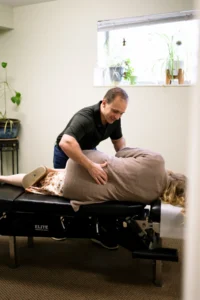
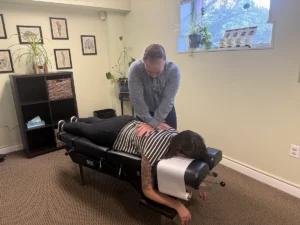
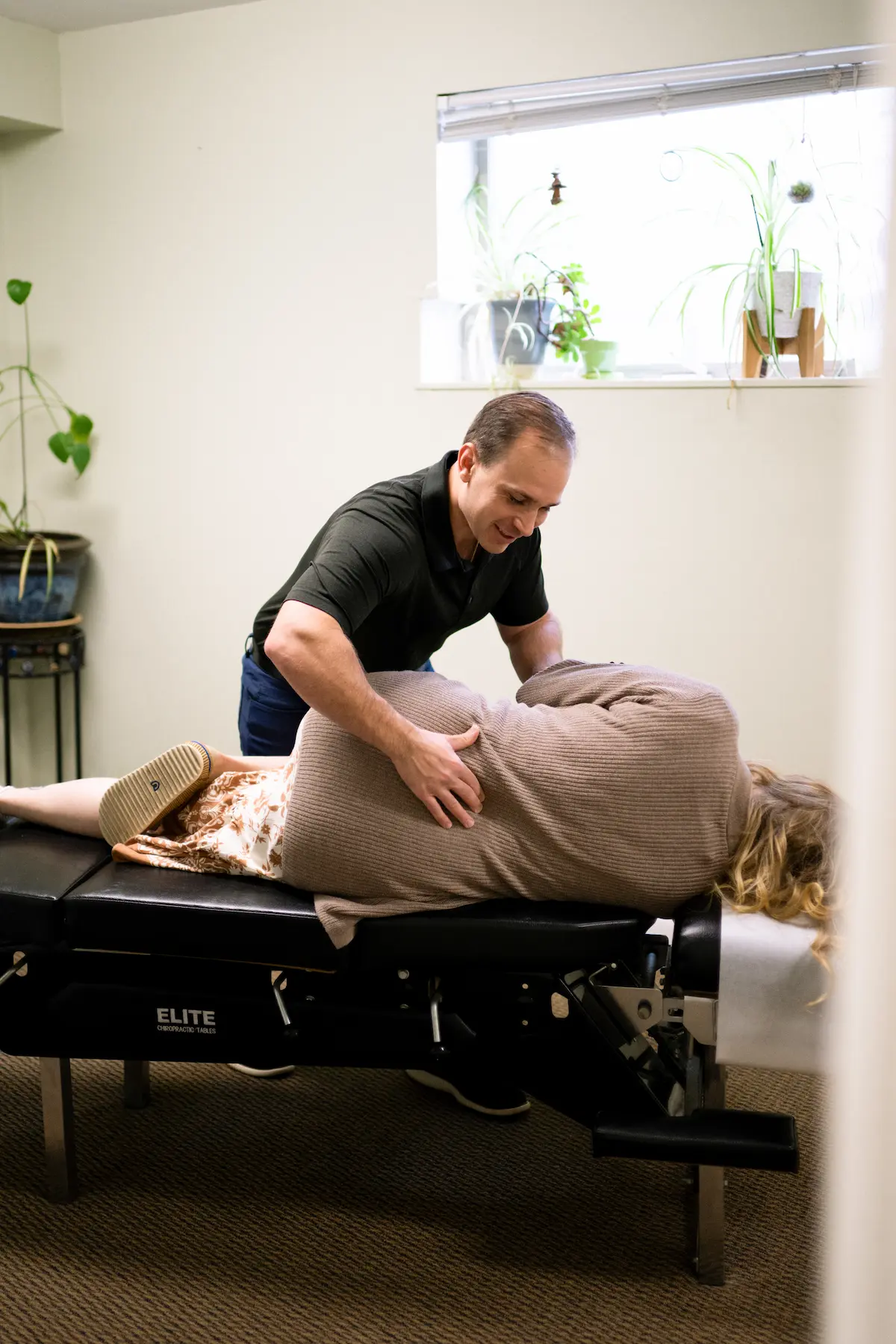
- Lumbar and pelvic adjustments using Gonstead or Thompson Drop Table
- Intersegmental traction when there is a disc-related component
- Guidance on sitting, lifting, and moving at home and at work
Many patients notice improvement within the first several visits. Recent pain often responds quickly, while long-standing pain usually takes more time and consistency. Your doctor will give you a realistic idea of what to expect after your exam, and regular visits average 15 to 20 minutes.
Red Flags That Need Urgent Care
Most sciatica and back pain is not an emergency. But some signs mean you should get medical care right away:
- Severe or rapidly worsening leg weakness
- Difficulty walking
- Loss of bladder or bowel control
- Numbness in the groin or inner thighs
If any of these show up, go to the emergency room. We will always refer you out when something is outside the scope of chiropractic care.
Simple Habits That May Help in the Meantime
While you wait for your visit, a few small changes can take some pressure off. Many Plymouth patients who work long days at a desk or behind the wheel find these helpful:
- Get up and move every 30 to 45 minutes instead of sitting for hours
- Take short, easy walks rather than resting in bed all day
- Bend at your hips and knees when lifting, and keep the load close
- Avoid any stretch or movement that sends pain further down your leg
Frequently Asked Questions
Can sciatica go away on its own?
Mild cases sometimes ease with time. If pain keeps coming back or lasts more than a few weeks, the underlying cause may still be there and is worth getting evaluated.
Do I need an MRI before seeing a chiropractor?
Not always. Our exam can show whether imaging is needed, and we will let you know if your findings call for an MRI.
Why does sciatica hurt more when I sit?
Sitting increases pressure on the discs and can stretch an already irritated nerve. That is why many people feel better standing or walking than sitting for long periods.
Get to the Source of Your Pain
Whether it is sciatica, low back pain, or a bit of both, a real exam is the first step toward getting back to work, workouts, and family. Call 508-746-5899 or contact Anchor Point Chiropractic to schedule your visit.