
Vertigo and dizziness can make the room spin, throw off your balance, and turn simple tasks like rolling out of bed into a challenge. Some cases start in the inner ear, while others are linked to tension or injury in the neck. At Anchor Point Chiropractic in Plymouth, MA, we look at your neck, posture, and health history to help figure out what is behind your vertigo and whether chiropractic care is a good fit.
Vertigo vs. Dizziness: What You Might Be Feeling
People use these words to describe a few different experiences. Vertigo usually means a spinning feeling, like you or the room is moving when nothing is. Dizziness is broader. It can feel like lightheadedness, unsteadiness, or a sense that you might lose your balance.
The difference matters because each feeling points toward different causes. When you come in, we will ask you to describe exactly what happens, when it starts, and what makes it better or worse. Those details help us narrow things down quickly.
Common Causes of Vertigo and Dizziness
Vertigo is a symptom, not a diagnosis. Finding the cause is the key to getting the right care.
Benign Paroxysmal Positional Vertigo (BPPV)
BPPV is one of the most common causes of vertigo. Tiny crystals in the inner ear shift out of place, and certain head movements trigger short bursts of spinning. Rolling over in bed, looking up, or bending down are classic triggers.
BPPV is often treated with specific head repositioning maneuvers. If your exam points to BPPV, we will explain what we found and make sure you get the care that fits.
Neck-Related Dizziness
Your neck plays a bigger role in balance than most people realize. The joints and muscles in your upper neck send constant signals to your brain about where your head is. When those joints are stiff or irritated, the signals can get mixed up and leave you feeling off balance.
This type of dizziness often comes with neck pain, stiffness, or headaches. It tends to show up with certain neck positions, like looking down at a phone or turning your head to check a blind spot.
Whiplash and Car Accidents
Dizziness is a common complaint after a car accident, even a minor one. The quick back-and-forth motion of whiplash can strain the muscles and joints in the neck. Symptoms sometimes take days to appear, so many people do not connect their dizziness to the accident right away.
Other Causes
Dizziness can also come from inner ear infections, Meniere’s disease, blood pressure changes, dehydration, low blood sugar, or medication side effects. Some of these need care from your primary doctor or a specialist. If your exam suggests another cause, we will tell you and point you in the right direction.
When Dizziness Is an Emergency
Most dizziness is not dangerous, but some signs need immediate medical attention. Call 911 right away if dizziness comes with:
- Sudden weakness or numbness in the face, arm, or leg, especially on one side
- Slurred speech or trouble understanding others
- Sudden vision loss or double vision
- A sudden, severe headache unlike any you have had before
- Chest pain, a racing heartbeat, or fainting
These can be signs of a stroke or a heart problem. Do not wait to see if they pass.
How Chiropractic Care Can Help With Vertigo and Dizziness
Chiropractic care is not the answer for every type of vertigo. Where it can help most is dizziness tied to the neck, including cases that follow whiplash or come with ongoing neck tension.
When the joints in your upper neck move better and the surrounding muscles relax, your brain gets clearer signals about where your head is. For many patients, that means less unsteadiness and fewer flare-ups tied to certain head positions.
What We Look for During Your Exam
Your first visit starts with a conversation about your symptoms and history. We will ask when the dizziness started, how long each episode lasts, and whether anything like an accident or a new job came before it.
From there, we check how your neck moves, look for areas of stiffness or tenderness, and review your posture. Both Dr. Jeffrey Vitenas and Dr. Jessie Swink review your case, so you get two sets of eyes on your symptoms from the start.
What Care May Include
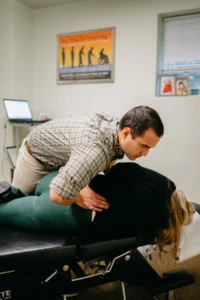
If your dizziness appears to be neck-related, your plan may include gentle chiropractic adjustments to the upper neck and upper back. We use techniques like Gonstead and Thompson Drop Table, and we adjust our approach based on your comfort level.
Visits usually take 15 to 20 minutes. If you are curious about the process before you come in, you can see what to expect at your first visit.
How Long Does It Take to Feel Better?
Every case is different. Some patients with neck-related dizziness notice a change within the first few visits, while others improve more gradually over several weeks. How long you have had symptoms, what caused them, and how your body responds all play a role.
We will check your progress at each visit and adjust your plan as needed. If your dizziness is not improving the way we expect, we will talk with you about other options, including a referral to your primary doctor or an ear, nose, and throat specialist. Many of our Plymouth patients appreciate knowing there is a clear plan either way.
Simple Tips While You Are Dealing With Dizziness
A few small changes can make dizzy spells easier to manage while you work on the cause:
- Sit up slowly and pause for a moment before standing, especially first thing in the morning
- Drink enough water throughout the day
- Keep a simple log of when episodes happen and what you were doing
- Avoid driving or climbing ladders when you feel unsteady
- Take breaks from looking down at screens to give your neck a rest
Bring your log to your visit. Patterns in when and how your dizziness shows up are some of the most useful clues we have.
Vertigo FAQs
Can a chiropractor help with vertigo?
It depends on the cause. Chiropractic care is often most helpful for dizziness linked to the neck, such as after whiplash or with ongoing neck tension. Your exam helps us determine whether your symptoms are likely to respond to our care.
Is it safe to get adjusted if I feel dizzy?
We check your history and symptoms carefully before any adjustment. If anything in your exam suggests a cause that needs medical attention first, we will refer you before starting care.
Why do I feel dizzy after a car accident?
Whiplash can strain the muscles and joints in your neck, which can affect your balance. Dizziness may show up hours or even days after the accident. If you have been in a crash, our car accident chiropractic care page explains how we can help.
Get Answers for Your Vertigo in Plymouth
If dizziness is making it hard to get through your day, an exam can help you understand what is going on and what to do next. Contact Anchor Point Chiropractic to schedule your visit.